
Handmade Pasta

Welcome back! 
Today, we have a recipe for the staple Italian dish: Handmade Pasta! This recipe will set up you with some delicious pasta noodles that you can then use to make literally any pasta dish, like a Carbonara or a Pesto pasta. This is a basic technique to master if you want the delicious satisfaction of eating fresh pasta at home, and it's really not too hard, especially if you have machines to help with the kneading and pressing of the pasta. However, if you're willing to put in a little bit of elbow grease, you can make this whole thing just by hand!

Handmade Pasta

A Cacio e Pepe that we made with handmade noodles

Makes about 4 servings

Ingredients:

  • 200 grams 00 (doppio zero) flour (plus more to dust)
  • 60 grams semolina flour
  • 3 eggs
  • 3/4 teaspoon salt
  • 1 tablespoon olive oil

Directions:

  1. Pour the flour and salt onto your workspace. Make a large well for the eggs in the middle.
  2. Carefully incorporate the egg into the flour until it starts to clump up.
  3. Knead the dough until smooth and slightly bouncy.
  4. Let rest for at least 30 minutes.
  5. Flatten the dough out into a long, thin sheet. You may want to split the dough into smaller chunks.
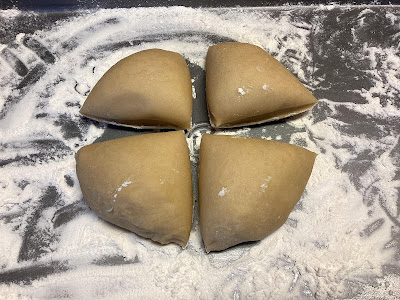
  6. Once at the desired thickness, dust both sides with flour and fold the sheets of dough up. Don't skimp on the flour or it will stick when you cut it.
  7. Cut the folded dough into the desired width.
  8. Cook the pasta in a boiling pot of salted water until al dente, for 2-5 minutes depending on the thickness of the noodles.
  9. Serve however you like!
    Served with some homemade pesto
The 00 flour is traditionally used in fresh pasta like this and helps to give the pasta the softer texture that fresh pasta has. Different recipes have varying proportions of 00 flour to semolina flour, with some using just 00 flour to some using a 1 to 1 ratio (though this is on the tougher side). We opted for a softer ratio of about 3 to 1, and it was a good balance. As for the variation in the cooking time, this highly depends on how thick the pasta is; we flattened the dough by hand so it ended up being fairly thick and needed 5 minutes to cook, but if you pressed the dough with a machine (or just put more effort in flattening the dough), a more typical sized pasta noodle would take just 2-3 minutes to cook. Any way you do it, you should just check periodically and see if the noodles are cooked the way you like, but keep a watchful eye because these cook much faster than dry pasta!

-Chefpo

Comments

Popular posts from this blog

Brownie Cheesecake

Welcome back to Chez Chefpo!  Today, we have a delicious treat that combines two wonderful desserts into one! If you like brownies and cheesecake, you're going to like this too, as the two flavors really balance and complement each other. It also goes well with some fresh fruit and is a good final course of a meal. (In fact, you got a sneak peek at it in our Pasta Salad recipe!) Brownie Cheesecake Makes a 9" round pan Ingredients: Brownie: 6 ounces dark chocolate 4 ounces (1 stick) unsalted butter 2 tablespoons brown sugar 6 tablespoons sugar 2 eggs 1 teaspoon vanilla extract 75 grams cake flour 1 tablespoon cocoa powder 1 teaspoon espresso powder 1/2 teaspoon salt Chocolate chips (optional) Cheesecake: 8 ounces ricotta cheese 8 ounces cream cheese 4 ounces plain greek yogurt 2 eggs 50 grams sugar 1/4 cups dried fruit (cranberries, raisins, blueberries) soaked in rum/brandy/Grand Marnier Lemon zest (optional) In place of the ricotta cheese, you could use another 8 ounces of c...

Nduja Pasta

Welcome back!  Today, we have another regional pasta recipe: Nduja Pasta! This dish comes from Calabria in Southern Italy, which is known for their chili peppers and their unique Italian dialect. Nduja is an interesting product that comes from Calabria - it is a sausage spread that is made of a mixture of pork and Calabrian chilis, giving it its distinctive red hue and spicy flavor. You can serve it in a variety of ways, from a simple spread on some bread, or in a pasta sauce as in this recipe. It really spices things up! Nduja Pasta Makes 4-5 servings Ingredients: 16 ounces pasta 2 tablespoons extra virgin olive oil 1 medium onion, finely chopped 2 cloves garlic, minced 4-6 ounces nduja, depending on how spicy you prefer your pasta 26 ounces tomato passata (strained tomatoes) Grated Parmigiano Reggiano to top Directions: Saute the onion in with the olive oil in a pan until soft and translucent. Add the garlic in and cook for 1-2 minutes. Add in the nduja and stir into the aromati...

Taiwanese Oyster Omelette

Welcome back!  Today, we have a staple of the Taiwanese night market: Oyster Omelette, or O-a-tsian! O-a-tsian, which is Hokkien for "oyster fry" is the embodiment of Taiwanese food: fresh seafood, combinations of chewy and crispy textures, and rich flavors. This is a dish that can be found at any night market across Taiwan, but now, you can have it in your home! Taiwanese Oyster Omelette Makes 2 omelettes Ingredients: Omelet: 65 grams sweet potato flour 35 grams tapioca flour 1/4 teaspoon salt 250 grams water 1 teaspoon sesame oil (specifically 香油) 3 eggs 8 large oysters Green, crisp vegetables, such as Taiwanese baby bok choy (小白菜) Sauce: 4 tablespoons ketchup 4 tablespoons sweet chili sauce 1/2 tablespoon soy paste (醬油膏) 1 tablespoon corn starch 1 tablespoon sugar 1/2 cup water Directions: Make the batter by whisking the sweet potato flour, tapioca flour, salt, water, and sesame oil. This batter will separate over time so be sure to mix until even before pouring into the p...